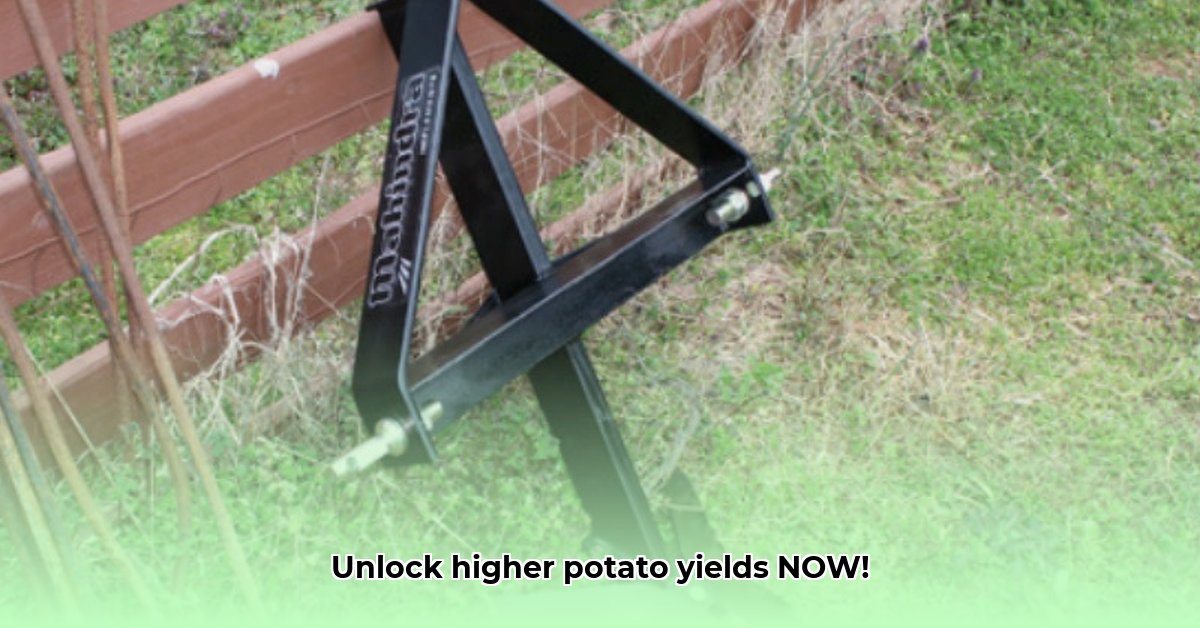
Choosing the right potato plow significantly impacts your harvest yield, soil health, and overall profitability. This guide helps you select between two primary types: three-point diggers and middlebusters, considering farm size, soil type, budget, and labor availability. For more information on tractor plows, visit this helpful resource.
Understanding Your Potato Farming Needs
Before selecting a potato plow, assess your farm's specific needs:
Farm Size: Large farms (hundreds of acres) benefit from the high capacity of three-point diggers, minimizing harvesting time. Smaller farms may find middlebusters sufficient and more cost-effective. Do you anticipate expansion in the future? This will influence your choice.
Soil Type: Soil conditions drastically affect plow selection. Three-point diggers excel in challenging conditions (rocky, hard-packed clay), while middlebusters are suitable for lighter, easier-to-work soils. Using the wrong plow can damage equipment or significantly reduce yield. Is your soil prone to compaction? This affects your choice.
Budget: Three-point diggers represent a higher upfront investment. Middlebusters provide a more budget-friendly solution for smaller operations. Consider the long-term costs, including maintenance and repairs, when making your decision. What is your overall equipment budget? This will guide your selection.
Labor: Three-point diggers automate much of the harvesting process, reducing manual labor. Middlebusters require more manual work for gathering and cleaning potatoes. Consider your workforce size and preferences. How much manual labor is acceptable within your operation? This is a key factor.
Three-Point Potato Diggers: Advantages and Disadvantages
Three-point diggers offer several advantages but also have limitations:
| Advantages | Disadvantages |
|---|---|
| High capacity, ideal for large farms | Higher purchase price |
| Increased automation, less manual labor | Complex operation; needs training and skill |
| Efficient for large-scale production | May compact soil more than a middlebuster |
| Typically more powerful | Requires higher horsepower tractor |
Middlebusters: A Detailed Analysis
Middlebusters present a different set of advantages and disadvantages:
| Advantages | Disadvantages |
|---|---|
| Lower initial cost; easier operation | Lower capacity, best for smaller farms |
| Generally gentler on the soil | Requires more manual labor for harvesting |
| Easier and cheaper maintenance | Slower harvesting speed |
Choosing Your Potato Plow: A Step-by-Step Guide
Follow these steps to select the optimal plow for your operation:
Farm Assessment: Thoroughly assess your farm's size, soil type, and budget. Be realistic about your resources and future needs. What are the long-term goals of your operation? This will help in equipment selection.
Needs Definition: Determine your acreage, acceptable manual labor levels, and potential future expansion. This clarifies your requirements and eliminates unsuitable options. How many acres do you need to harvest efficiently? This number is crucial for selection.
Model Research: Research various potato plow models from different manufacturers. Compare specifications, features, and read reviews from other farmers to gauge performance and reliability. What is the reputation of various manufacturers in your area? Seek input from other farmers.
Expert Consultation: Consult with agricultural equipment dealers and experienced potato farmers. Their insights based on local conditions are invaluable. What do experienced potato farmers in your region recommend? This is valuable advice.
Test Drive (if possible): If feasible, test drive different plows to experience their operation firsthand. This hands-on evaluation provides invaluable insights before committing to a purchase. Is hands-on testing feasible before purchase? Prioritizing this is beneficial.
Post-Harvest Considerations: Plan for post-harvest potato handling (cleaning, storage, transport). This ensures a seamless workflow from harvesting to market. What are your post-harvest procedures and storage capacity? This impacts overall efficiency.
Total Cost Analysis: Consider the total cost of ownership (initial purchase, maintenance, repairs, fuel, labor) over the equipment's lifespan. What is the total cost of ownership for each option, considering the life cycle? This ensures a well-informed decision.
Sustainable Practices and Long-Term Efficiency
Regardless of your plow choice, proper maintenance is crucial for efficiency and longevity. Regular inspections, timely repairs, and operator training maximize productivity and prolong equipment life. Sustainable practices (crop rotation, reduced tillage) improve soil health and contribute to long-term farm success. What are your farm's sustainability goals? This is important for long-term planning.
Comparing Three-Point Diggers and Middlebusters for Sustainable Farming
This section compares three-point diggers and middlebusters, focusing on their suitability for sustainable farming.
Key Differences:
| Feature | Three-Point Potato Digger | Middlebuster |
|---|---|---|
| Primary Function | Potato harvesting | Furrow creation, potato harvesting |
| Soil Disturbance | Minimal, focused on potato rows | Moderate, dependent on initial soil conditions |
| Sustainability Suitability | Excellent for reduced/no-till systems | Good, especially with no-till practices |
| Cost | Higher initial investment | Lower initial investment |
| Maintenance | More complex | Relatively simpler |
| Operator Skill | Moderate to high | Lower |
| Potato Damage | Potentially less with careful operation | Potentially higher risk |
Choosing the Right Tool: A Simplified Guide
Soil Assessment: Well-drained, loose soils suit both. Clay soils might require pre-plowing for middlebusters. What is your soil type and drainage capability? This affects your decision.
Farm Size: Larger farms benefit from middlebuster efficiency. Smaller operations might manage with manual harvesting. What is the size of your potato crop? This is relevant for your equipment choices.
Budget: Middlebusters offer lower upfront costs. How much can you invest in equipment? This is a critical factor.
Key Considerations for Sustainable Practices:
Soil Health: Minimize soil disturbance—three-point diggers are better in this regard. What is your soil's health and your ability to implement sustainable practices? This is central to your decision.
Fuel Efficiency: Consider long-term fuel consumption. What is your fuel budget and your commitment to fuel efficiency? These are important aspects.
Crop Damage: Careful operation is crucial to minimize potato damage. What is the acceptable level of crop damage for your operation? This is something to keep in mind.
Labor Requirements: Three-point diggers reduce labor but require a tractor. Middlebusters require less overall labor but more post-harvest handling. What is your labor availability and cost? These are critical considerations.
The ideal potato plow depends on your soil type, farm size, budget, and sustainability goals. Careful consideration ensures efficient and sustainable potato harvesting.